


ROMEO & JULIET
BY WILLIAM SHAKESPEARE
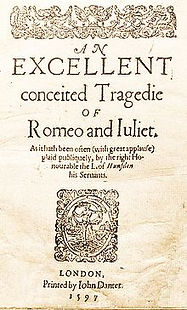

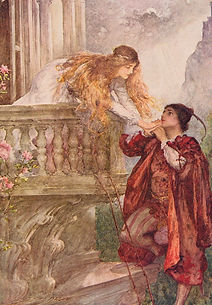
“The emotional power with which the story continues to engage audiences makes clear its resonance with psychological realities not limited by the particulars of the time and place in which is was written,” Katherine Dalismer writes in “Middle Adolescence: Romeo and Juliet”, and she’s right. Shakespeare’s tragedy, a social commentary told through the lense of two children in a doomed love on how destructive feuds between two parties are, is transcendent. Was that Shakespeare’s intention? We’re not sure. Was that even the original point that Shakespeare was trying to make? That’s up in the air as well. But one thing is for certain: Romeo and Juliet’s fated, entangled, adolescent romance is a story compelling enough to populate remix culture full centuries after it was first written and performed.
Romeo & Juliet isn’t a tragedy because these two teenagers were star-crossed lovers, that there was a divine intervention stopping them from being together—as alluring as that story is, the crux lies in something much simpler. Romeo & Juliet is a tragedy because these two children from feuding families fell in love and got caught spectacularly and horrifyingly in the crossfire. Their lives were cut short not just because they were kids without fully developed frontal lobes, it was because the war between the Capulet and Montague families was so vast and so ruthless that the adults willfully ignored their children long enough for them to fall in love and meet a tragic end.
I wanted Juliet. When we were reading the text in that classroom, all I wanted was to portray her, to inhabit the hopeless romantic that she was, to understand her motives and intentions, centuries later, in her frozen age of adolescence. And while it’s incredibly compelling to focus entirely on the romance of it all, the portrayal of Juliet in the original text as we know it alongside these four remixes, seems important. Dalismer agrees: Shakespeare gives us the subjective experience of adolescent passion. This is through the poetic verse the entirety of the text is written in as well as the structure of the play. Juliet, in her myriad of portrayals since Shakespeare’s is eternally youthful—doe eyed, loving, soft—in a world that is otherwise filled with violence. While this does enforce gender roles to an extent, it’s fascinating to see Juliet portrayed in a modern context, specifically within these examples. When we see Juliet in Now or Never—she’s Solis, a masculinized version of her original character—but Halsey sticks true to Juliet’s soft adolescence, that kind warmth that’s mirrored through the text itself.
Another reason why adolescence is so innately tied to the allure of Romeo & Juliet’s demise is the lax and encouraging roles of the older and wiser characters within the text. This is all true of the antagonists in the remixed versions, but especially poignant within the original play—Mercutio, Friar Lawrence, and the Nurse, all spur along this romance, to varying degrees. Without the steady heads of any of the adults in the text—even those in their corner—Romeo and Juliet inevitably fall at the mercy and melodrama of their youth. Dalismer emphasizes how the youthfulness of Romeo and Juliet is apparent at the outset: we see them through the eyes of their parents before we see the pair themselves, and we quickly peer into Romeo’s adolescence. Romeo, who begins the play in love with someone else entirely, and Romeo who falls for Juliet almost immediately after meeting her. Juliet is the romantic, that soft love she encompasses is obvious—but Romeo is just as much an example of adolescence leading to his ultimate demise.
“You find out who you are when you are in love,” W. H. Auden hypothesizes, “and the experience is likely to appear at critical junctures.” One of the most critical junctures of love happens upon arriving at adolescence—past being a child but still free from adulthood—and that vulnerable, easily manipulated state is where the narrative of Romeo & Juliet stands, and is precisely why the text is so transcendent. Love unites, but it also blinds. This, compounded by the perfect storm of forbidden romance, leads Romeo and Juliet to a fated demise—and the story has stayed relevant, particularly in these examples of their remixes—rebellion, infatuation, and melodrama are all inherent and vital concepts in adolescence, and no matter how humanity has evolved and will continue to evolve, that chemistry, that allure—it’s tied forever and completely to being young and in love.